
The N8 PRP Policing Innovation Forum 2025
Neurodiversity in the Criminal Justice System
26 June 2025 | York
The ninth annual N8 PRP Policing Innovation Forum was held in York on 26 June, on the theme of Neurodiversity in the Criminal Justice System.
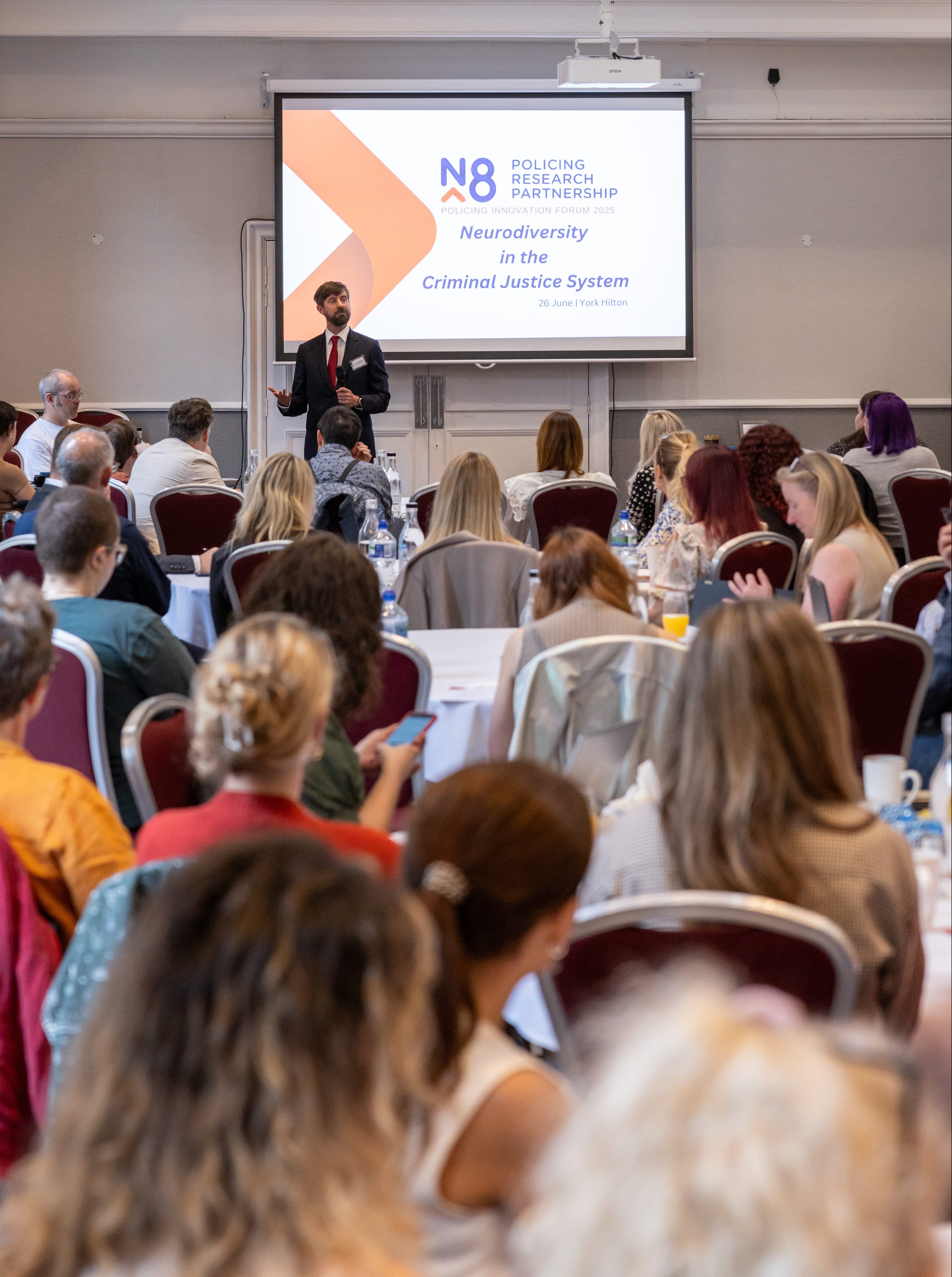
Prof Geoff Pearson welcomed delegates
Delegates were welcomed by Professor Geoff Pearson (University of Manchester), N8 PRP Academic Director, and Dr Geoff Page (University of York), the Forum chair. Dr Page gave an overview of the programme, highlighting key themes of diversity, effective participation, engagement, and adaptations. He then introduced the keynote speaker of the Forum, ACC Matt Welsted.
The Value of Neurodiversity
ACC Matt Welsted (West Midlands Police) spoke in his role as NPCC Lead for Neurodiversity. ACC Welsted began with a note of optimism, underlining the potential and achievements of neurodiverse individuals, and emphasising the value that neurodiverse individuals bring to policing.
“In my experience, if you ‘see’ the person, their potential and support them, they will show you levels of outstanding commitment”.
– ACC Matt Welsted, NPCC Lead for Neurodiversity
Not Naughty, Stupid, or Bad
Sean James Campbell, Head of Policy, Communication and Impact at User Voice, presented their project ‘Not Naughty, Stupid, or Bad’. Interviews with 104 neurodiverse (diagnosed or self-diagnosed) inmates across 11 prisons found significant levels of early-life adversity, and emphasised that those with few or no resources of their own struggle to navigate the criminal justice system.
Effective Participation
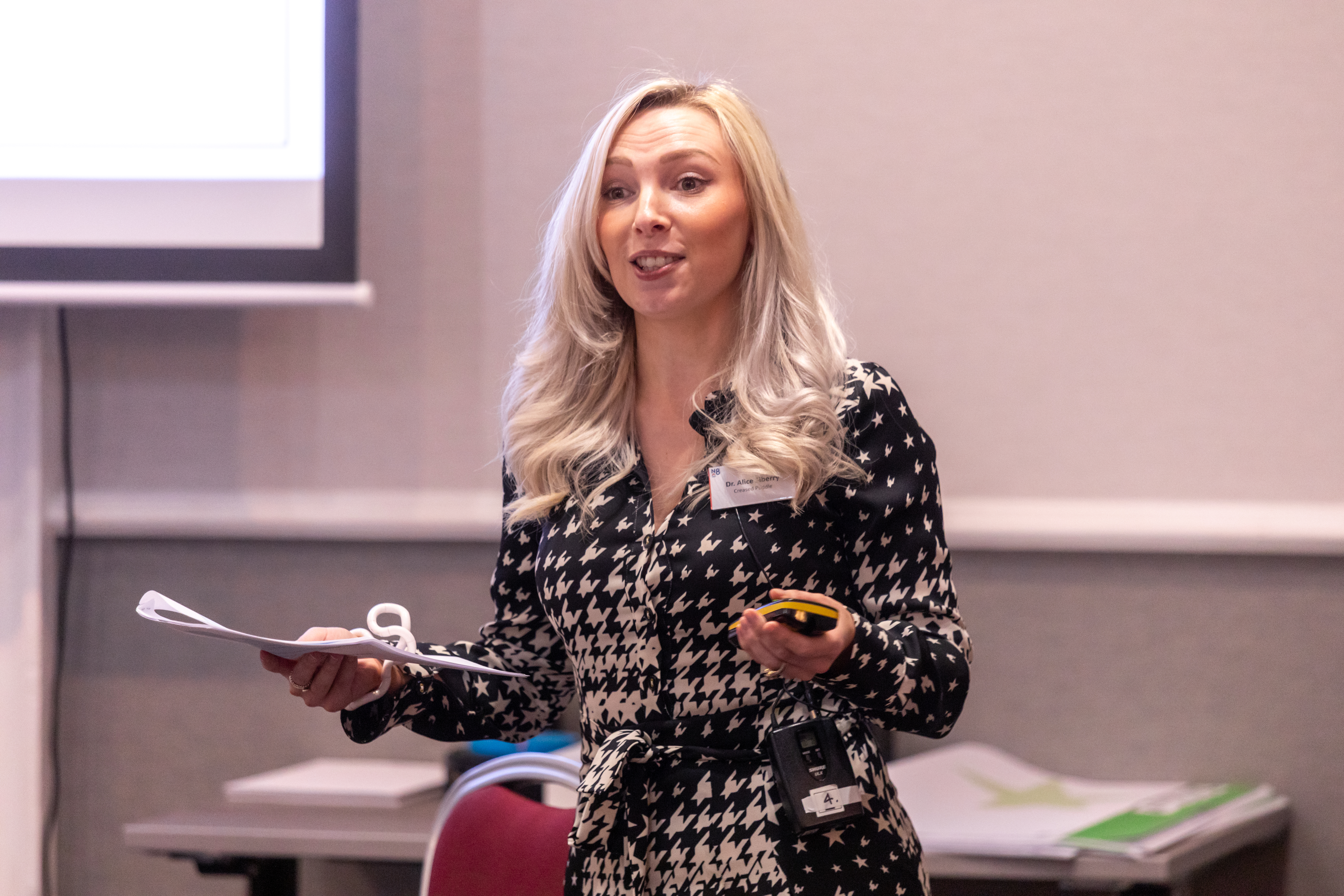
Dr Alice Siberry presenting her work
Dr Tom Smith (University of Western England) introduced the panel session on the theme of Effective Participation. The panellists were
Dr Alison Jobe (Durham University), Dr John Taggert (Queen’s University Belfast), and Dr Alice Siberry, Specialist Criminal Justice Neurodiversity Consultant at Creased Puddle.
The panel presented their work on effective participation for neurodiverse victims, suspects, and the wider community, then discussed what changes they wanted to see. All agreed there had been significant changes in visibility and understanding. Suggested changes included all police stations having an in-house Criminal Justice Intermediary, the use of triage suites as standard, a realistic look at what neurodiversity education and training means for policing.
Research Poster Exhibition
Delegates were invited to view the NRiPN Research Poster Exhibition, showing 5 posters. The prize for the best poster went to Darhyl Lewis and the team from Making Space for A Toolkit to Support Neurodivergent Individuals Navigating the Criminal Justice System. Darhyl won of 3 books from the Routledge criminal justice list.
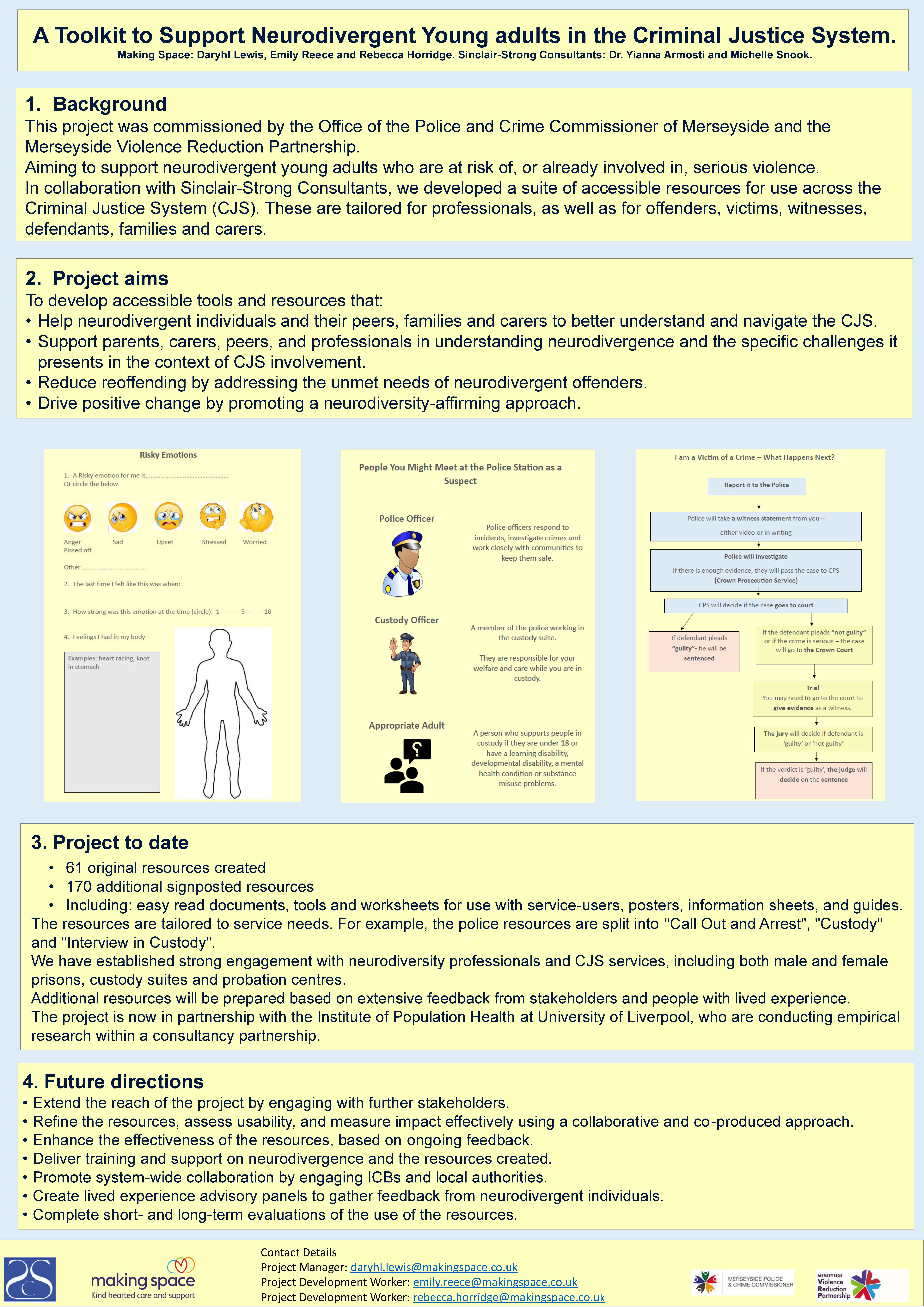
Darhyl Lewis
Toolkit to support Neurodivergent individuals navigating the Criminal Justice System
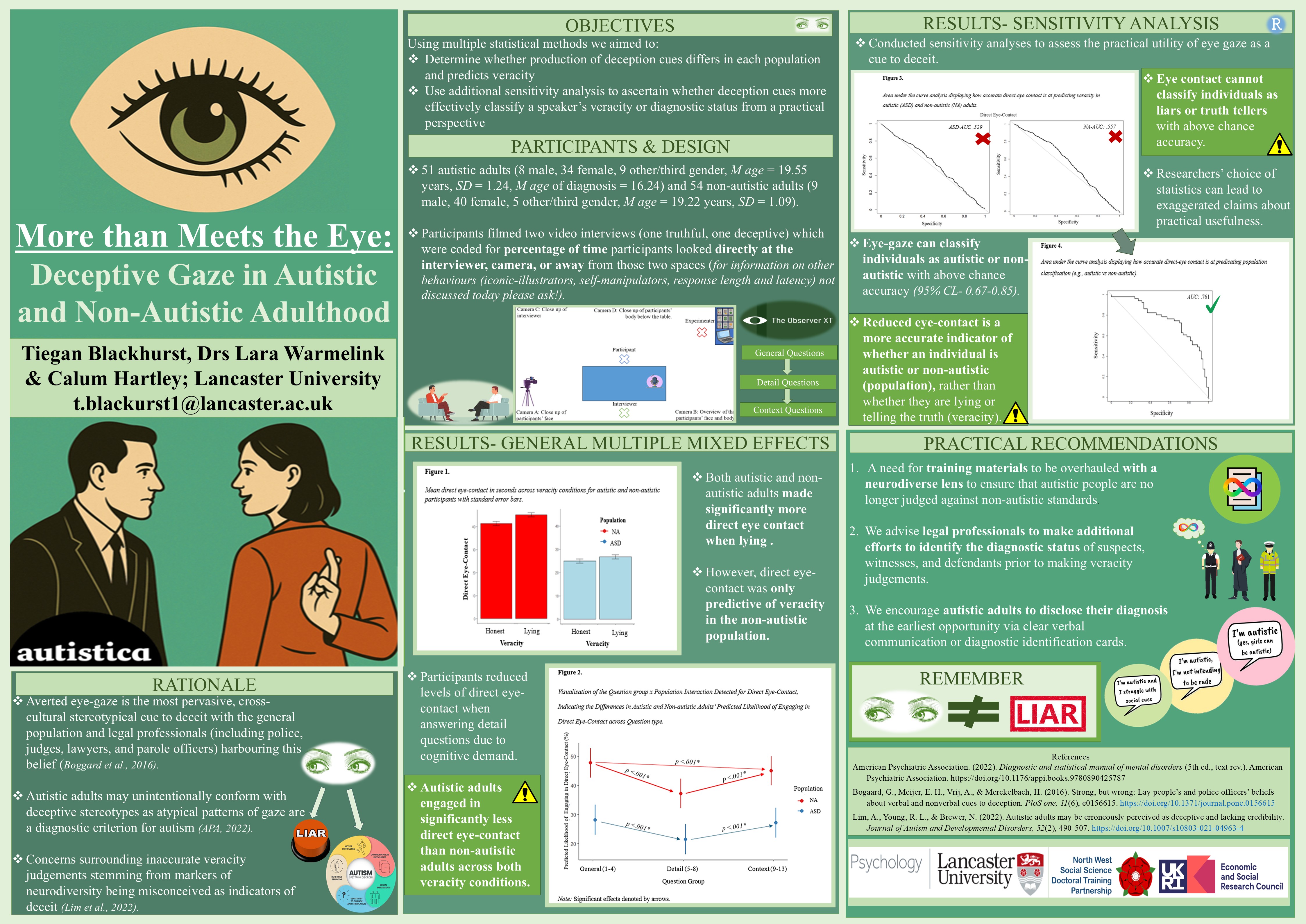
Tiegan Blackhurst
More than Meets the Eye: Deceptive Gaze in Autistic and Non-Autistic AdulthoodNRiPN
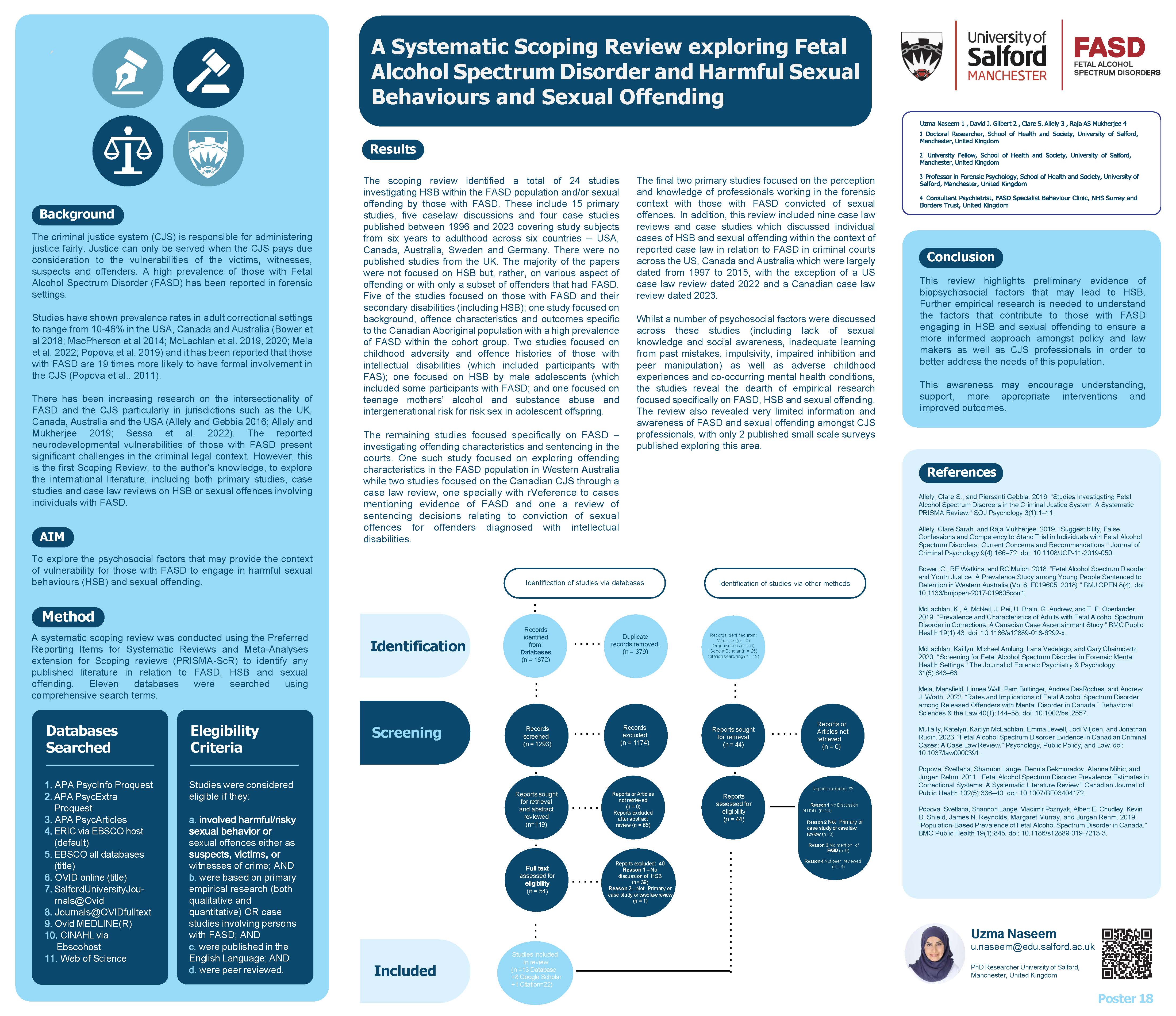
Uzma Naseem
A Systematic Scoping Review exploring Fetal Alcohol Spectrum Disorder and Harmful Sexual Behaviours and Sexual Offending
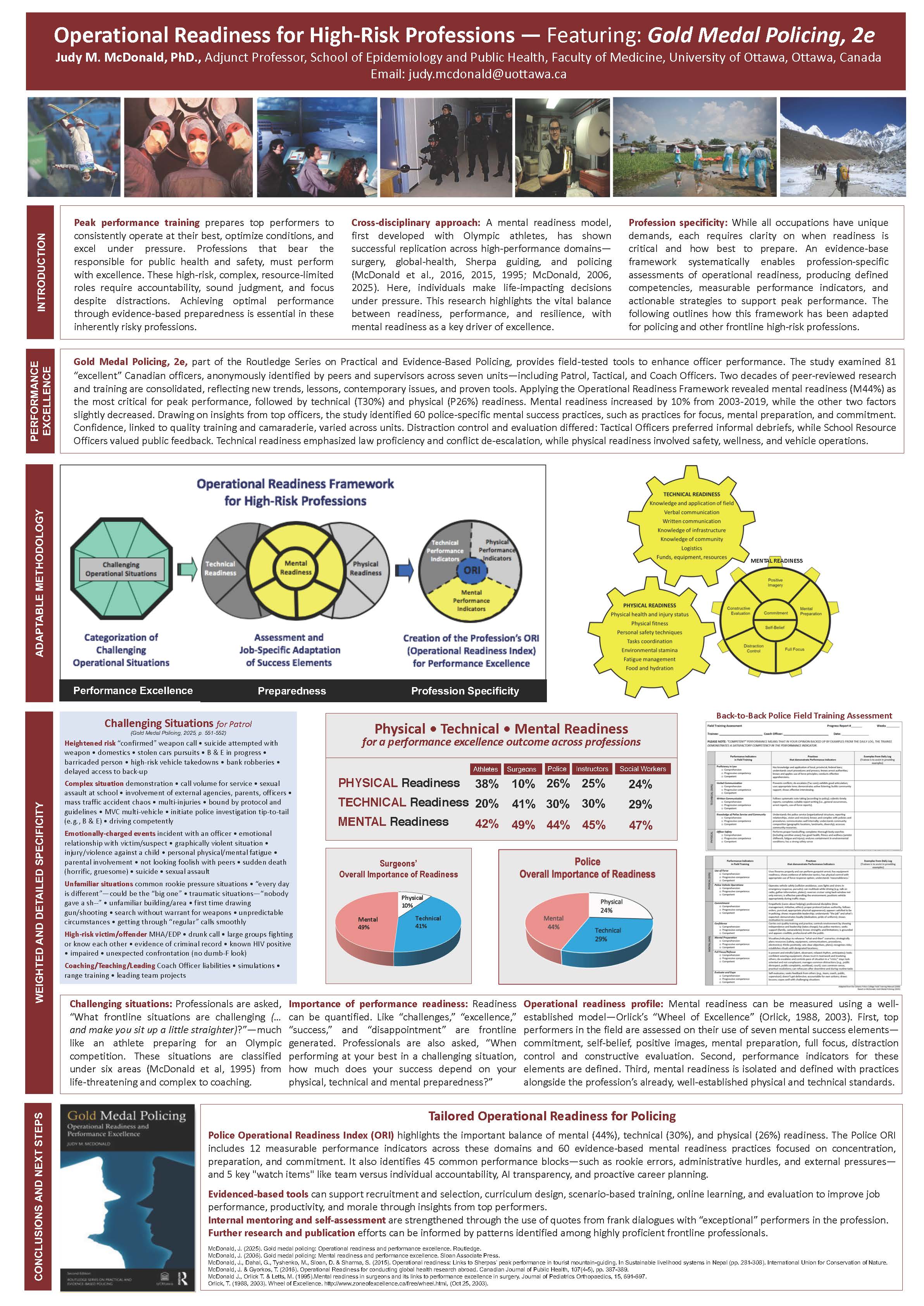
Judy McDonald
Operational Readiness for High-Risk Professions
Roundtables
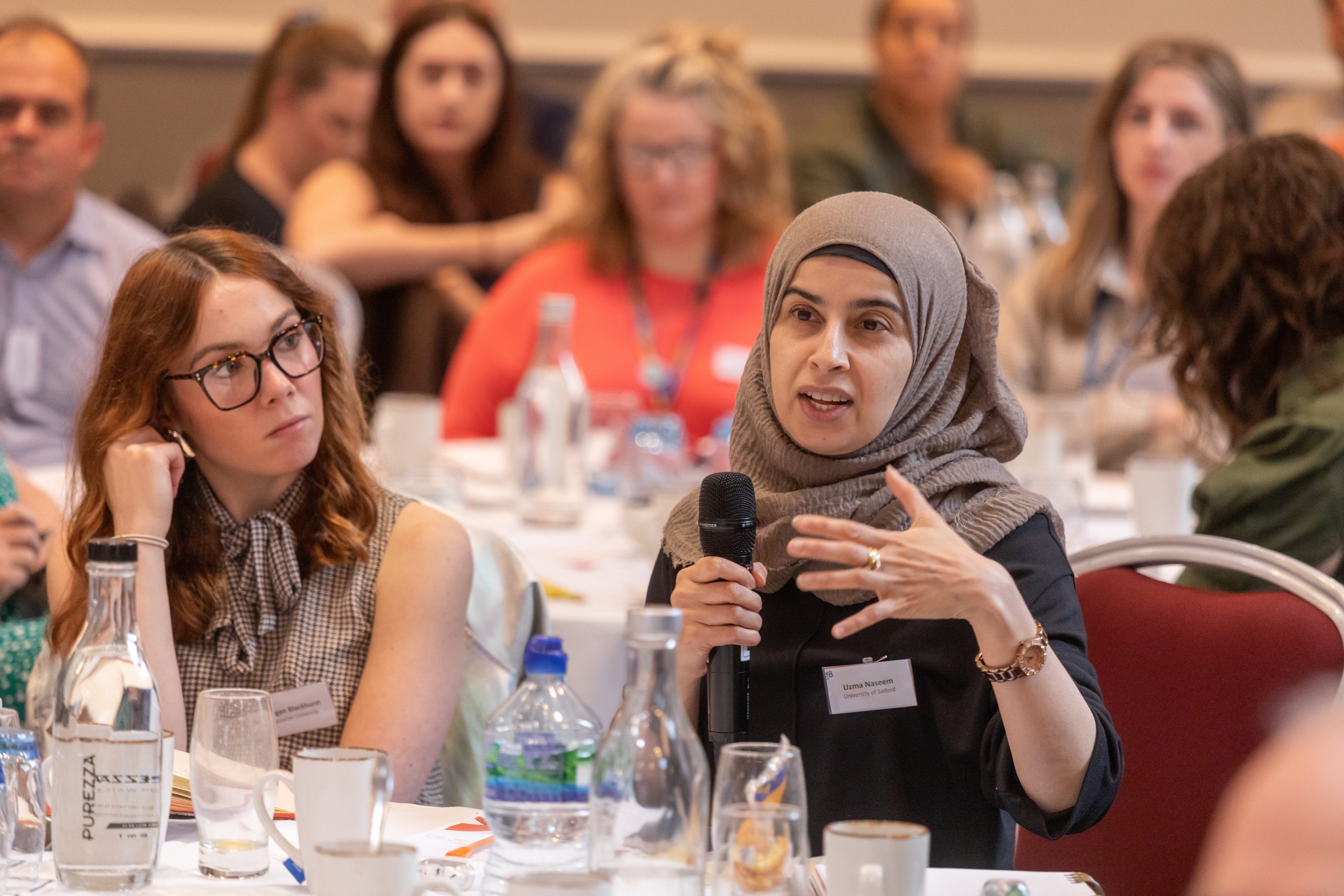
Uzma Saleem, NRiPN poster exhibitor
Delegates joined one of four roundtables to discuss innovative practice and new research, considering how they could apply this learning in their own practice and what questions it raised for future collaboration.
There were sessions on Youth Justice, facilitated by Dr Anne-Marie Day (Manchester Metropolitan University), The Custody Toolkit, facilitated by Chloe Holloway-George (Nottingham University), Supporting Neurodivergent Staff, jointly led by Jake Harrison, (South Yorkshire Police) and Jack Fitzpatrick (LJMU), and The Custody Screening Pilot, led by Leesa Edwards and Peter Aiston (Cumbria Constabulary).
Wrap Up
Dr Geoff Page thanked the delegates for their contributions to the day. He reflected on the value of a practitioner-led event, focused on the practical steps needed to improve the experience of neurodiverse people in the criminal justice system.
Follow Up
“I came away feeling positive about the future.”
– Respondent to event evaluation survey
Feedback on the event was very positive, with delegates remarking that they found the content and speakers very interesting and informative, and valued the amount of discussion included in the programme. Delegates also shared they would be following up with other attendees and planned to read further on the ideas and research discussed.
Policing Innovation Forum 2026