
The N8 PRP Northern Evidence Based Policing Hub 2026
What Makes a ‘Good’ Investigation?
Evidence, Victims, Specialism, and the Realities of Policing
21 January 2026 | Lancaster
On 21 January 2026, the University of Lancaster welcomed the N8 PRP Northern Evidence Based Policing Hub for a knowledge exchange event, What Makes a ‘Good’ Investigation? Evidence, Victims, Specialism, and the Realities of Policing.
The event was held with the support of the Lancaster Policing Academic Centre of Excellence.
Professor Layla Skinns, interim N8 PRP Director, welcomed 32 delegates to the day. In sessions looking at interview skills, digital evidence, specialism, and best practice in training and victim-centred service, speakers from academia and policing discussed the challenges and practicalities for investigative policing.
Delegates also took part in Operation Northgate, an immersive forensic linguistics training exercise at the University of Lancaster’s Data Immersion Centre.
The challenges for improving investigations
In her keynote, NPCC Lead for Investigations DCC Katy Barrow-Grint said that ‘every officer needs to see themselves as an investigator’. She highlighted challenges that were echoed by other speakers throughout the day, including the increasing complexity of investigations, the high proportion of ‘young in service’ officers’, and the overstretched resources across the Criminal Justice System. In the following sessions on ‘Evidence, Skills and Strategies’, and ‘Specialism and Putting Victims First’, speakers and delegates engaged in lively discussions, with key themes emerging on the nature and value of specialism, what makes effective training, and the relationship between effective evidence gathering and providing a good service to victims.
“Every officer is an investigator”
– DCC Katy Barrow-Grint
Specialism and Training
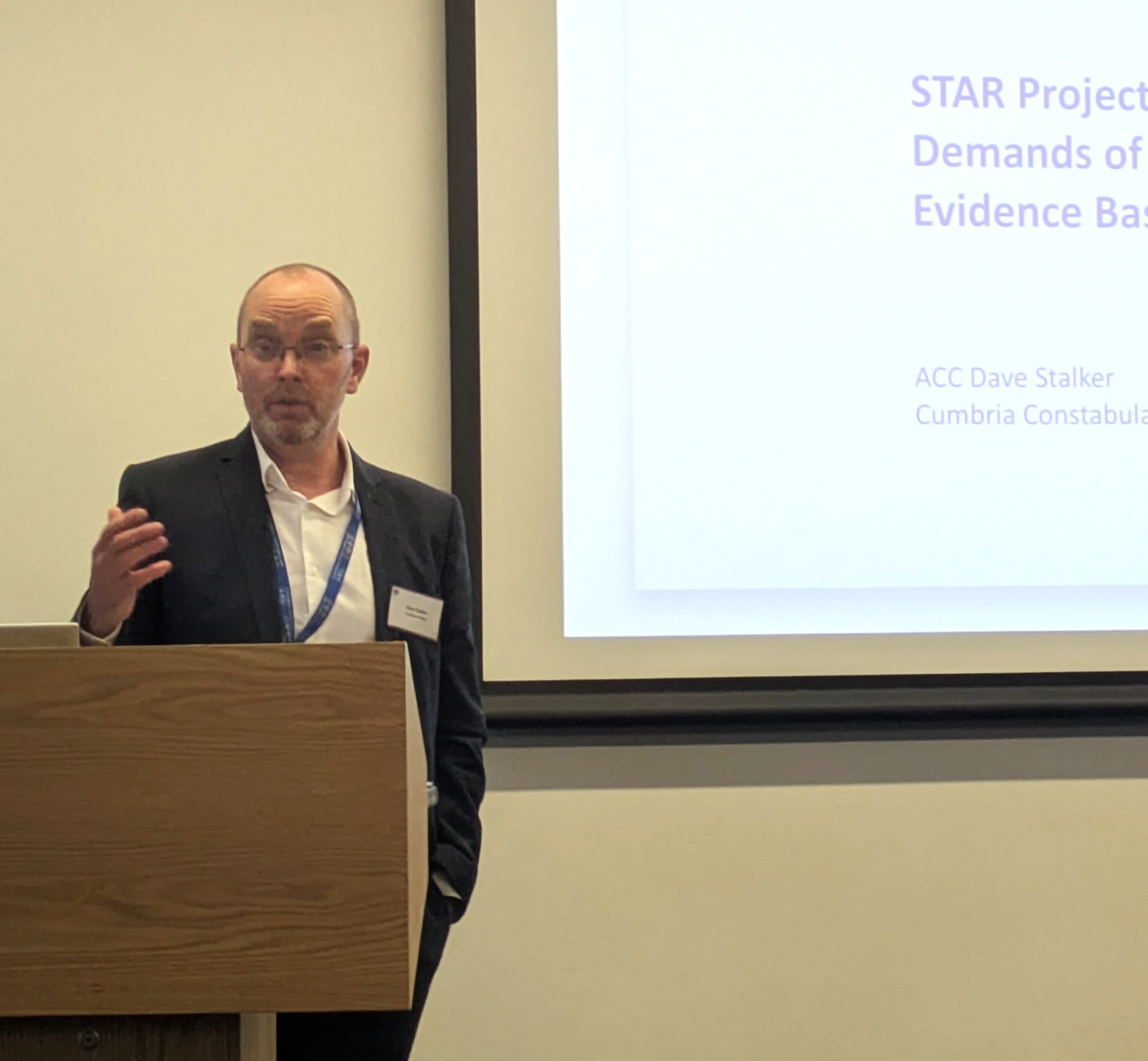
ACC Dave Stalker
ACC David Stalker (Cumbria Constabulary), NPCC Lead for Investigative Standards, said that the key question for all forces was, ‘How do we support inexperience to achieve quality?’. A major part of this question is how to achieve effective training and understanding the role of specialism.
In a session on investigative interviewing, Professor Fiona Gabbert (Goldsmiths University) argued that the psychological purpose of techniques needed to be explained for training to be effective.
Professor Dana Wilson Kovac’s (Exeter University) research showed that Digital Media Investigators provided valuable support, if they had dedicated time for the role and continuing development. This was echoed in Arianna Barbin’s (University of Suffolk) research, which found that specialism could be a valuable tool to increase job satisfaction and staff retention if adequate training was provided.
“Police should have the same level of knowledge and awareness for preserving digital evidence as they have for a physical crime scene.”
– Professor Dana Wilson-Kovacs
DI Fiona Gray, Cumbria Constabulary, presented the Digital Toolkit and Digital Training Academy as case-studies of best practice. The Toolkit links officers to specialist resources and support, while the Academy provides accessible, standardised training supported by a regional partnership. The major benefit of these combined resources was giving officers the confidence to take action.
Similarly, in Andy Croft’s presentation on the Yorkshire and the Humber Regional Scientific Support Services Control Room, he identified adequate training and continuous oversight of operators as key to their confidence in providing a good service.
Victims and Evidence
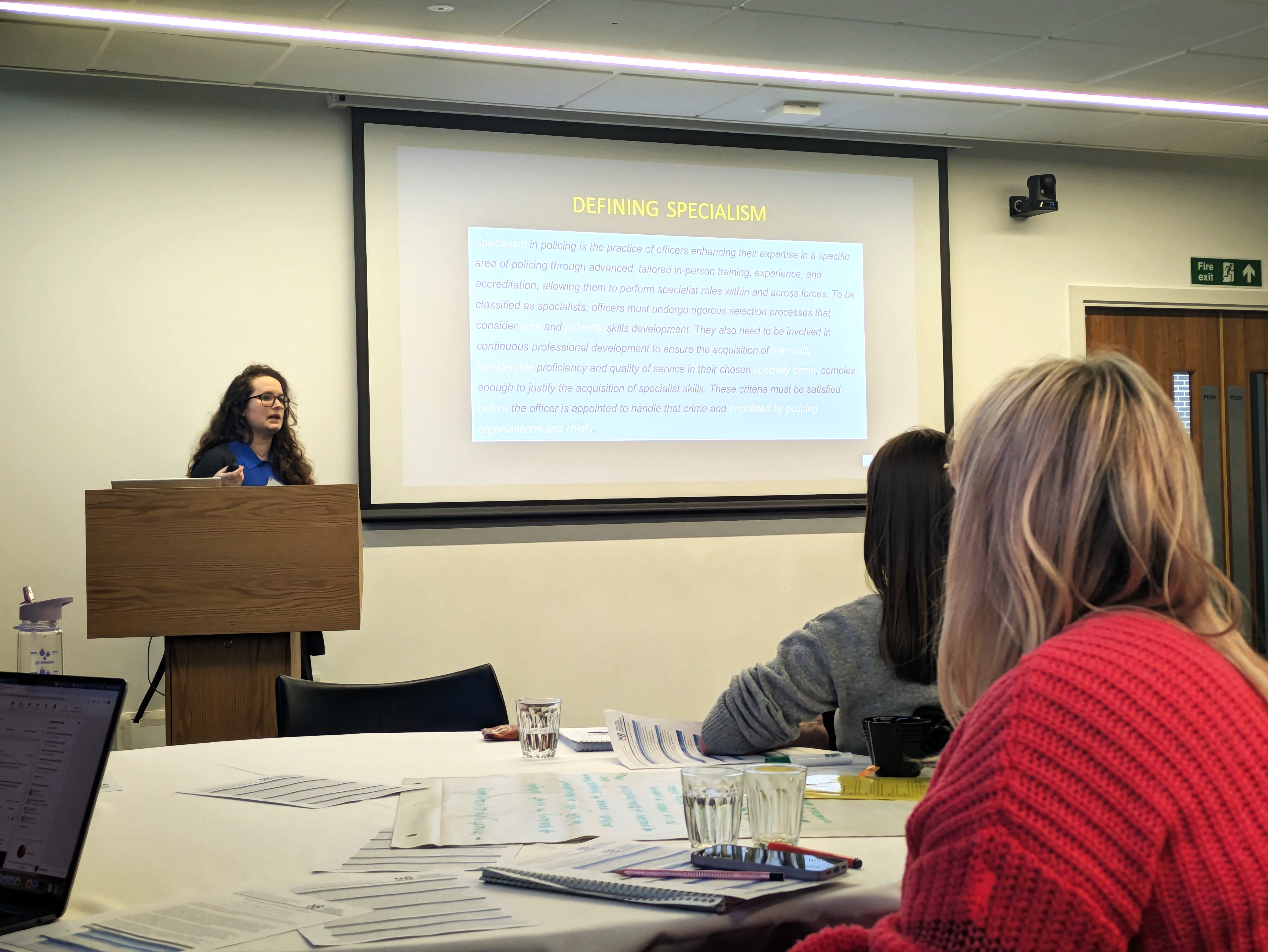
Arianna Barbin
The central importance of victims’ experience and outcomes in investigations was discussed throughout the day.
DCC Katy Barrow-Grint made the point that an ‘investigative mindset’ is essential to creating positive outcomes for victims, as opportunities lost at the start of a case can lead it to be closed entirely.
In the discussion on Investigative Interviewing, delegates talked about how the weakness of interview admissions as evidence diminished the importance of skills like rapport-building for officers. However, these skills are vitally important for engaging with victims and achieving a positive outcome, and this should be a central consideration.
Andy Crofts, CSI Operations Support Manager at Yorkshire and the Humber Regional Scientific Support Services (RSSS), presented the RSSS Control Room as an example of best practice in delivering victim satisfaction and effective evidence recovery.
“Victims are empowered by having an active role in the assessment.”
– Andy Crofts, Yorkshire and the Humber Regional Scientific Support Services
All volume crime in the region is referred to the RSSS Control Room, where an operator undertakes an initial assessment through video link on the victim’s phone, and decides whether to dispatch an in-person CSI for evidence recovery. Even though dispatch rates have dropped slightly and evidence recovery rates are unchanged, victim satisfaction for the service is almost 100%.
Mr Crofts argued this was due to consistency, empowerment, and setting expectations. All cases were reviewed over video link using standard protocols, so all victims knew their report had been considered seriously. In addition, the video link gave them an active role in the crime scene review, the opportunity to ask questions, and allows the operator to explain decisions and provide advice. This both empowers the victim and helps to set expectations about the likelihood of evidence recovery.
How do we get to ‘good’?
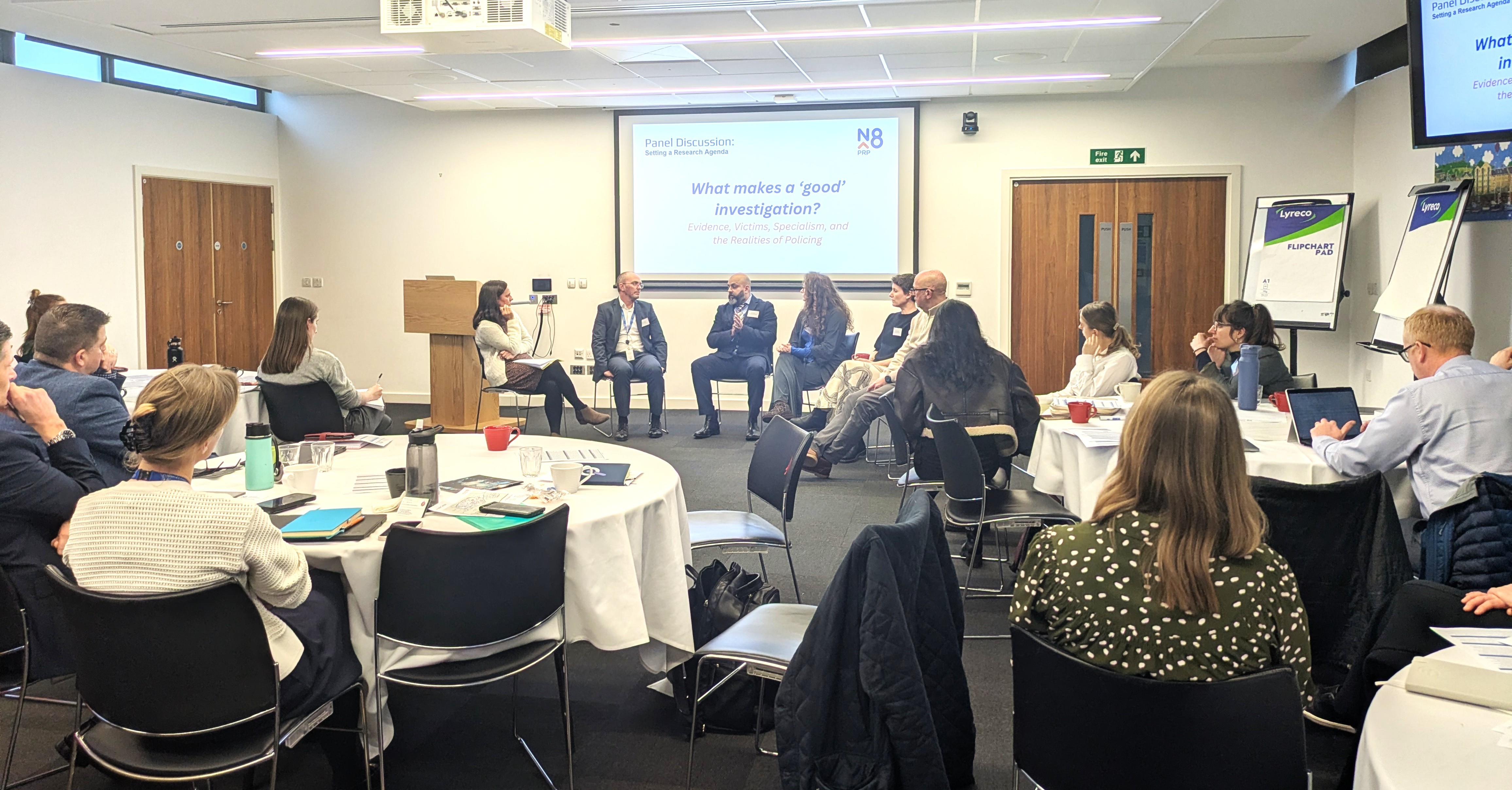
Professor Layla Skinns chairs a panel of the speakers
In the final session of the day, speakers and delegates discussed their priorities on how improving investigation and outcomes. These included the complexity of demand, the role of oversight, the issue of resourcing on demand and workload.
The challenges and opportunities of technological developments were raised. Delegates discussed the difficulty in realising the potential of new software to analyse highly confidential data, especially when parent companies are based overseas. The difficulty of retaining staff with specialist training in digital investigation was also discussed. The possibilities of public-private partnership, the need for leadership, and the need to improve the core skills in policing were raised.
The challenge of effective collaboration was raised, including issues of accessibility and ‘knowing who to speak to’. Greater co-ordination across the forces was called for, including a ‘docking-in point’ for research.
The day ended with a discussion of the value and importance of collaborative policing research, and the importance of ensuring evidence-based recommendations are grounded in the realities of policing.
Feedback from delegates
Feedback to the event was very positive, with respondents commenting positively on all of the sessions. Respondents specifically valued hearing about the current context of investigations in policing from DCC Katy Barrow-Grint and ACC Dave Stalker, said they found Arianna Barbin’s presentation on specialism highly topical, and thought Professor Fiona Gabbert’s discussion of how to to turn research into effective training very useful. Respondents also highlighted the value of hearing about practical solutions from DI Fiona Grey and Andy Crofts, said that Operation Northgate gave a fascinating insight into forensic linguistics.
“All of the presentations and the panel were excellent!”
– respondent to the evaluation survey
Asked what ideas and actions they would take from the event, many respondents talked about collaboration opportunities and their interest in building co-produced research. There was interest in research focused on good investigation as quality service and fair process, the potential for shorter-term research projects, and the prospect of an aligned CPD framework for policing framed by research. Respondents also highlighted areas of practice they wanted to learn more about, including ‘GoodSam’, the Regional Scientific Support Services Control Room, and the potential to apply the idea of ‘building rapport’ to other areas of policing.
Follow up
All of the presentations are available at the links below. If you would like more information on any of the topics covered, please contact the speakers directly or get in touch with the N8 PRP project manager, helen.gordon-smith@manchester.ac.uk.
What Makes a 'Good' Investigation?
What Makes a 'Good' Investigation?